Architecture · Urban Planning · 2009
Urban Masterplan — City Growth to 2035
A city doesn't grow by accident. This project asked what intentional growth looks like — and who gets heard in the process.
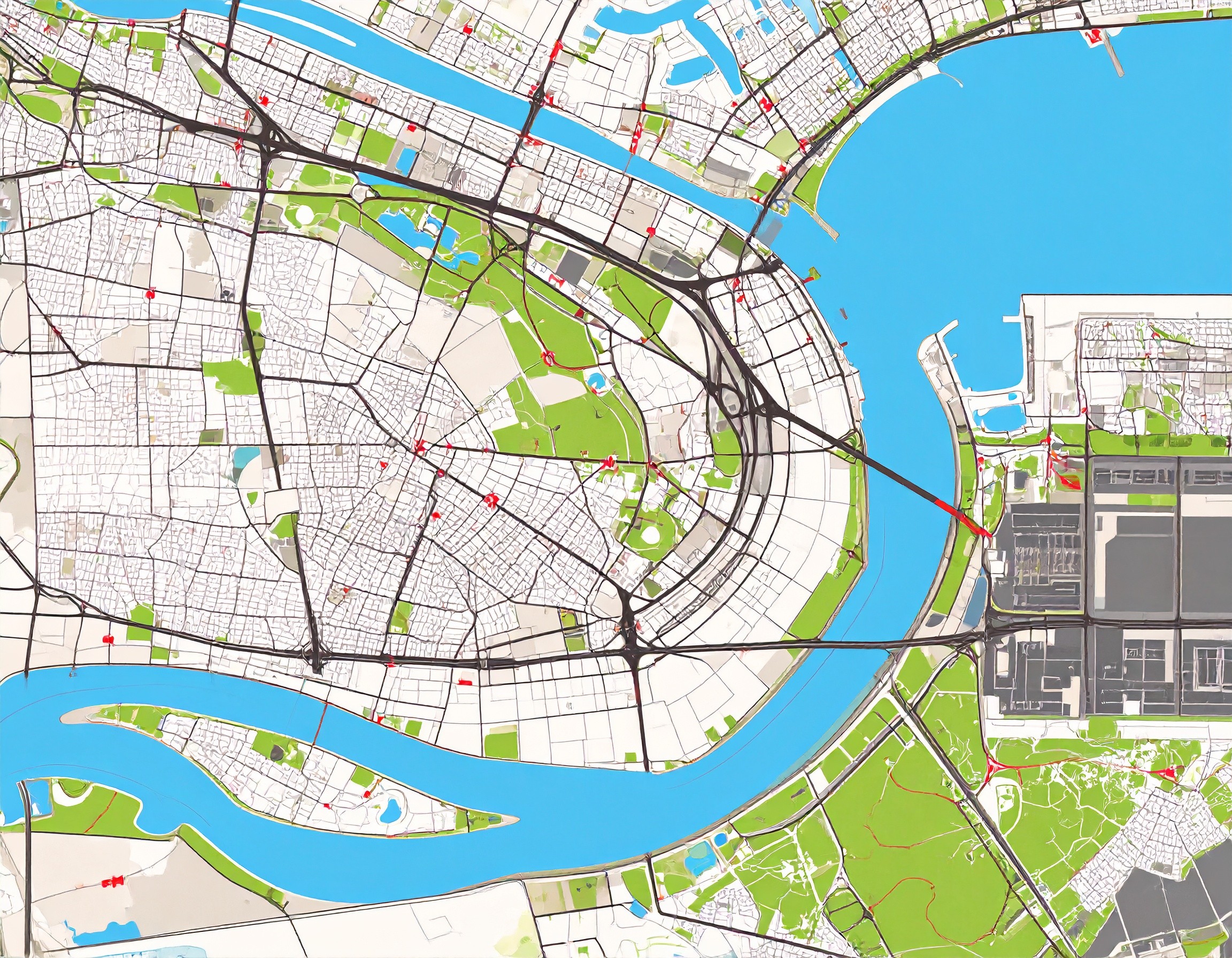
01 — The Brief
Planning a city's growth requires listening to more than data
City growth is easy to draw on paper. A grid, some zones, transport corridors. What's harder is designing for the people who will actually live inside the result — people whose lives, languages, and daily patterns don't fit neatly into planning categories.
I joined this project across Phases 1 and 2, working as urban planner, architect, and bilingual coordinator (English-Arabic). My role spanned data collection and spatial analysis through to the design of masterplan components that would shape a city's trajectory through 2035.
02 — My Contribution
Spatial analysis, bilingual communication, masterplan design
In Phase 1, I led data collection across the city, mapping existing spatial patterns and identifying areas of strain — where infrastructure was already failing the people who depended on it, and where growth could be directed to relieve pressure rather than create new problems.
As the English-Arabic translator and liaison, I also ensured that the planning logic was communicated accurately to local stakeholders and that their input reached the international planning team without being flattened in translation. Urban planning that cannot be understood by the community it affects is not planning — it's imposition.
In Phase 2, I contributed to the design of masterplan components: zoning strategies, transport connectivity, public space frameworks, and the growth corridors that would guide development decisions for the next 25 years.
03 — What This Taught Me
Scale changes the stakes, not the method
Working at city scale taught me something that I've applied to every project since: the difference between planning and design is whether you're designing for a person or for a diagram. The best urban plans I've seen are ones where someone, at every decision point, asked: what does this mean for the person who will live here?
That question is the through-line of my career — from masterplans to mobile apps. The scale changes. The person at the centre doesn't.
A city plan that can't be explained to the people it will shape isn't a plan — it's a decision made without them.