Architecture · Infrastructure · Iraq · 2012
Abu Skhair Dam — $80M Infrastructure
Infrastructure at this scale is designed once and lived with for generations. Every line drawn carries weight.
01 — The Project
Critical agricultural infrastructure for a region that needed it
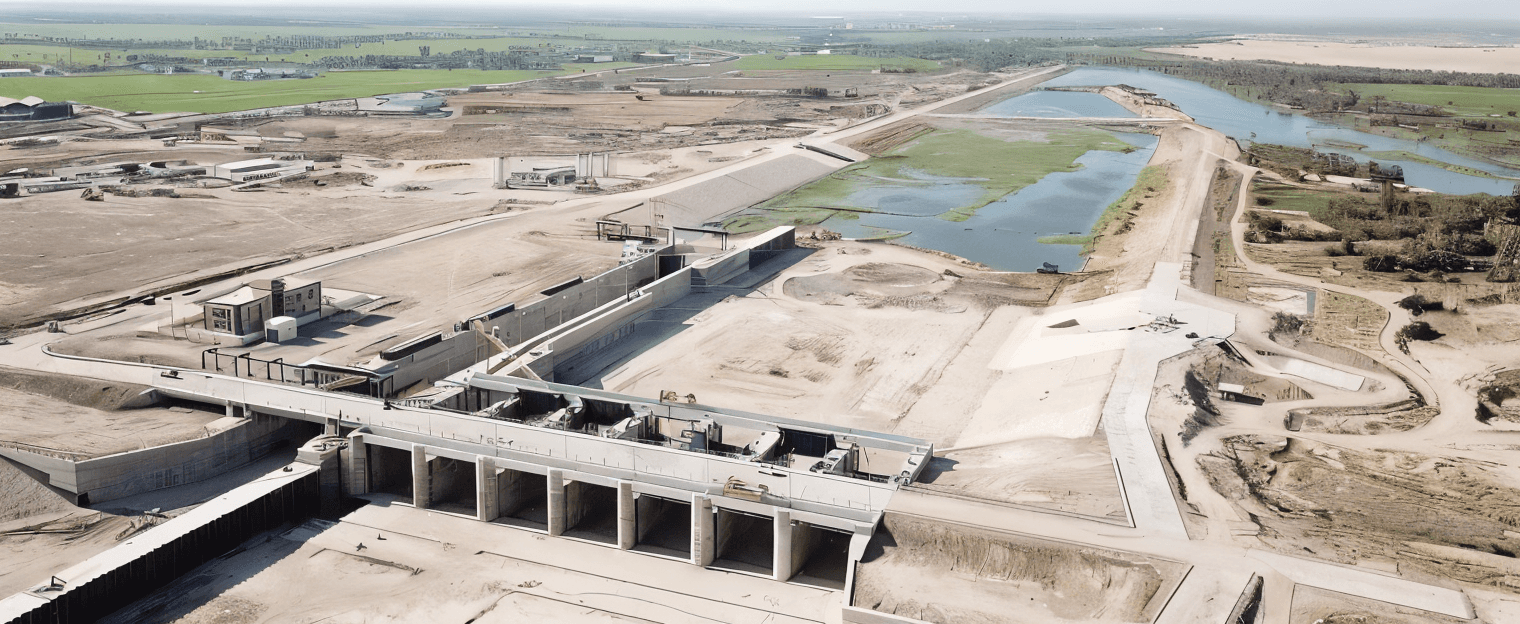
The Abu Skhair Dam was designed to irrigate over 90,000 hectares of agricultural land in Iraq — a project of genuine consequence for the communities and farmland that depended on it. At $80M, Phase 1 alone represented the kind of infrastructure investment that, when done right, changes the conditions of daily life for thousands of people.
I was the lead architectural and structural drafter for Phase 1. This meant translating engineering requirements and site conditions into precise construction documents — the kind of drawings that would be used not just for approval but for physical construction in challenging conditions.
02 — My Role
From concept to construction-ready documentation
Infrastructure drafting at this scale is an exercise in precision and consequence. A dimension error in a structural drawing doesn't get corrected in a later iteration — it gets built. My work involved coordinating architectural and structural requirements, ensuring that the spatial logic of the design was expressed accurately in every section, elevation, and detail.
Working in Iraq added another layer of complexity: navigating local construction standards, supply chains, and site conditions that differ significantly from European norms. The drawings had to be unambiguous regardless of who was reading them.
03 — What I Carried Forward
Precision as a form of respect for the people downstream
Every infrastructure project I worked on reinforced the same principle: precision in design documentation is not pedantry. It's a form of respect for the people who will use what you build, and for the people who will build it. Ambiguous drawings produce unsafe structures.
This mindset — that clarity in how you communicate a design is as important as the design itself — is something I brought directly into digital UX work. A confusing interface, like a confusing construction drawing, puts the burden on the person downstream.
A dimension error in a structural drawing doesn't get corrected in a later iteration — it gets built.